Quilts Design Set: Precision Patterns for Digital Craftsmanship and Physical Creation
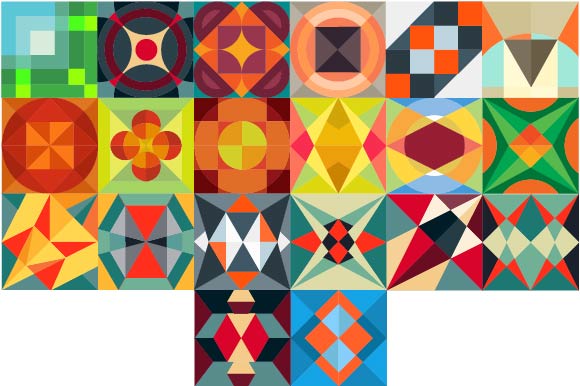
At the intersection of tradition and technology lies the Quilts Design Set—a versatile, format-rich collection of geometric quilt motifs built around a foundational 4 inch square pattern. Unlike generic clip art or one-off templates, this design set is engineered for fidelity across digital workflows and physical fabrication. Its core unit—a precisely scaled, modular 4 inch square—serves as both a compositional anchor and a production-ready building block. Whether you're plotting a laser-cut fabric template, generating embroidery files for a commercial machine, or preparing vector assets for classroom instruction, the Quilts Design Set delivers consistent geometry without compromise.
Why the 4 Inch Square Is More Than Just a Measurement
The 4 inch square isn’t arbitrary—it’s a pragmatic standard rooted in textile practice and digital precision. In quilting, 4 inches aligns with common rotary cutting mat grids, seam allowance calculations (¼ inch seams yield clean 3½ inch finished units), and standard fat quarter dimensions. Digitally, it translates cleanly into pixel-perfect raster outputs at common resolutions (e.g., 300 DPI yields a 1200 × 1200 px PNG) and remains fully scalable in vector formats without distortion. This dual compatibility means designers don’t need to “adapt” the pattern—they apply it directly.
Each motif in the Quilts Design Set is constructed from this base unit, allowing seamless tiling, rotation, and mirroring. A Log Cabin variation may repeat every 4 inches horizontally and vertically; a Flying Geese layout might stack two squares vertically to form an 8 × 4 inch rectangle—all while preserving alignment, proportion, and registration points. That consistency eliminates guesswork during layout, especially when transitioning between screen and sewing machine, plotter, or CNC cutter.
Format Flexibility: Matching File Types to Real-World Tasks
The Quilts Design Set ships in five complementary formats—SVG, Transparent PNG, EPS, DXF, and native vector-ready files—each serving distinct stages of the creative pipeline:
- SVG (Scalable Vector Graphics): Ideal for web-based design tools (like Cricut Design Space or Silhouette Studio), responsive UI integration, and browser-based prototyping. SVG preserves layers, groups, and editable paths—crucial when adjusting color fills or isolating individual blocks for animation or interactive learning modules.
- Transparent PNG: Used where anti-aliased edges and background independence matter—think digital lookbooks, social media previews, or overlaying patterns onto fabric photos for client presentations. At 300 DPI and multiples of 4 inches (e.g., 1200 × 1200 px), it retains crispness even when zoomed or printed at poster scale.
- EPS (Encapsulated PostScript): A legacy but still vital format for professional print houses and large-format plotters. Its PostScript foundation ensures reliable rendering on RIP (Raster Image Processor) software, making it the go-to for high-fidelity fabric printing proofs or archival documentation.
- DXF (Drawing Exchange Format): The lingua franca of CAD-driven fabrication. Laser cutters, CNC routers, and industrial embroidery machines rely on DXF for precise path definitions. Because the Quilts Design Set exports clean polylines—not raster traces or grouped objects—machines interpret seam lines, fold marks, and cut boundaries unambiguously.
- EPS + SVG combined use cases: Educators preparing lesson plans might embed SVG versions in interactive PDFs for student manipulation, while exporting EPS for reproducible handouts. Researchers studying pattern symmetry can import SVG into computational geometry tools (e.g., Processing or Python’s Shapely) to quantify rotational invariance or tessellation efficiency.
Practical Applications Across Diverse Users
What makes the Quilts Design Set resonate across such varied audiences isn’t just its technical robustness—it’s how each user group maps its structure to tangible outcomes.
Hobbyists and Makers
For home quilters, the 4 inch square simplifies paper piecing and foundation templates. Printing the Transparent PNG at actual size onto freezer paper lets users iron templates directly onto fabric—no scaling errors, no guesswork. SVG files imported into cutting machines eliminate manual tracing, reducing prep time by up to 70% for complex blocks like Mariner’s Compass or Cathedral Windows.
Textile Designers and Small-Batch Producers
Designers developing limited-run fabric collections use the EPS and DXF variants to generate repeat swatches in Adobe Illustrator or Affinity Designer. Because all motifs originate from the same 4 inch grid, scaling a single block to a 16 inch repeat introduces zero misalignment—critical when matching selvage edges or ensuring continuity across yardage. One studio reported cutting development time for a 12-motif line from six weeks to under ten days using this consistency.
Educators and Curriculum Developers
In STEAM education, the Quilts Design Set becomes a tactile tool for teaching symmetry, fractions, coordinate geometry, and algorithmic thinking. A middle school math teacher might project an SVG version of a Nine Patch grid, then ask students to calculate area ratios when substituting triangles for squares—or to write pseudocode that rotates a block 90° three times to return to origin. The transparency and modularity make abstraction concrete.
Researchers and Cultural Historians
Scholars analyzing regional quilt traditions benefit from the set’s clean vector forms. By importing EPS files into GIS or image analysis software, they can measure angular deviations in hand-drawn historic patterns versus machine-generated equivalents—quantifying evolution in craft precision over decades. The standardized 4 inch base also enables cross-collection comparison: a researcher comparing Pennsylvania Dutch hexagons with Hawaiian appliqué motifs can normalize scale before assessing motif density or negative space ratios.
Business Owners and Product Developers
Manufacturers producing quilt kits, stencils, or digital embroidery packs rely on the Quilts Design Set to maintain brand consistency across SKUs. A single DXF file can drive both a 4 inch acrylic stencil and a 12 inch wall decal—same geometry, different output medium. E-commerce teams use Transparent PNGs for zoomable product previews, knowing that the visual representation matches the physical item down to the millimeter.
Workflow Integration: From Concept to Completion
Unlike static image libraries, the Quilts Design Set supports iterative, non-linear workflows. Consider a typical sequence for launching a new quilt pattern line:
- A designer sketches a concept on graph paper, noting that key elements align to 4 inch intervals.
- They import the base Quilts Design Set SVG into Illustrator, locking the grid layer and building custom compositions using copy-paste—no redrawing needed.
- For prototyping, they export DXF to a desktop laser cutter, producing 1:1 cardboard mock-ups in under two minutes.
- Marketing assets are generated simultaneously: Transparent PNGs for Instagram carousels, SVG for animated website banners, and EPS for trade show banners—all sourced from the same original file.
- Before production, the team runs a preflight check: opening the DXF in QCAD to verify closed paths, confirming stroke weights in EPS match embroidery machine requirements (0.01 mm minimum), and validating PNG alpha channels in GIMP.
This parallelism—enabled by format fidelity—is where the Quilts Design Set moves beyond convenience into strategic advantage. Teams avoid version drift, reduce asset handoff friction, and maintain design integrity from sketch to shelf.
Considerations for Optimal Use
While the Quilts Design Set excels in precision, effective deployment requires attention to context:
- Color mode matters: EPS and SVG retain RGB/CMYK assignments, but DXF carries no color data—only geometry. Always assign fill colors post-import if outputting for dye-sublimation or screen printing.
- Scale verification is non-negotiable: Even with “actual size” exports, confirm measurements in your target software. Some embroidery platforms default to inches; others use millimeters. A quick test cut on scrap material prevents costly errors.
- Layer naming impacts automation: SVG and EPS files include logical layer names (e.g., “SeamLine”, “FoldMark”, “AppliqueOutline”). Preserving these in editing software allows batch operations—like hiding all seam lines before exporting a simplified teaching diagram.
- Transparency ≠ universality: While Transparent PNGs work beautifully for web and presentation, they’re unsuitable for direct CNC routing (which requires vector paths). Always use DXF or SVG for fabrication-critical tasks.
Looking Ahead: Pattern as Infrastructure
The Quilts Design Set reflects a broader shift—from treating patterns as isolated visuals to recognizing them as interoperable infrastructure. As generative design tools mature and AI-assisted pattern synthesis gains traction, having a rigorously structured, multi-format foundation becomes essential. Future iterations may include parametric variants (e.g., SVG with adjustable sashing width), accessibility-optimized versions (high-contrast outlines, tactile-ready DXF layers), or AR-integrated markers for real-time spatial previewing on fabric bolts.
Yet its current strength remains unchanged: clarity of purpose, consistency of execution, and quiet versatility. It doesn’t replace skill—it amplifies it. Whether you’re guiding a child’s first stitch, calibrating a $200,000 embroidery system, or modeling textile behavior in finite element software, the 4 inch square stands as both a starting point and a shared reference. That’s not just utility—that’s intention made measurable.