Christmas Cards, Patterns and Tags: Strategic Design Assets for Purposeful Holiday Communication
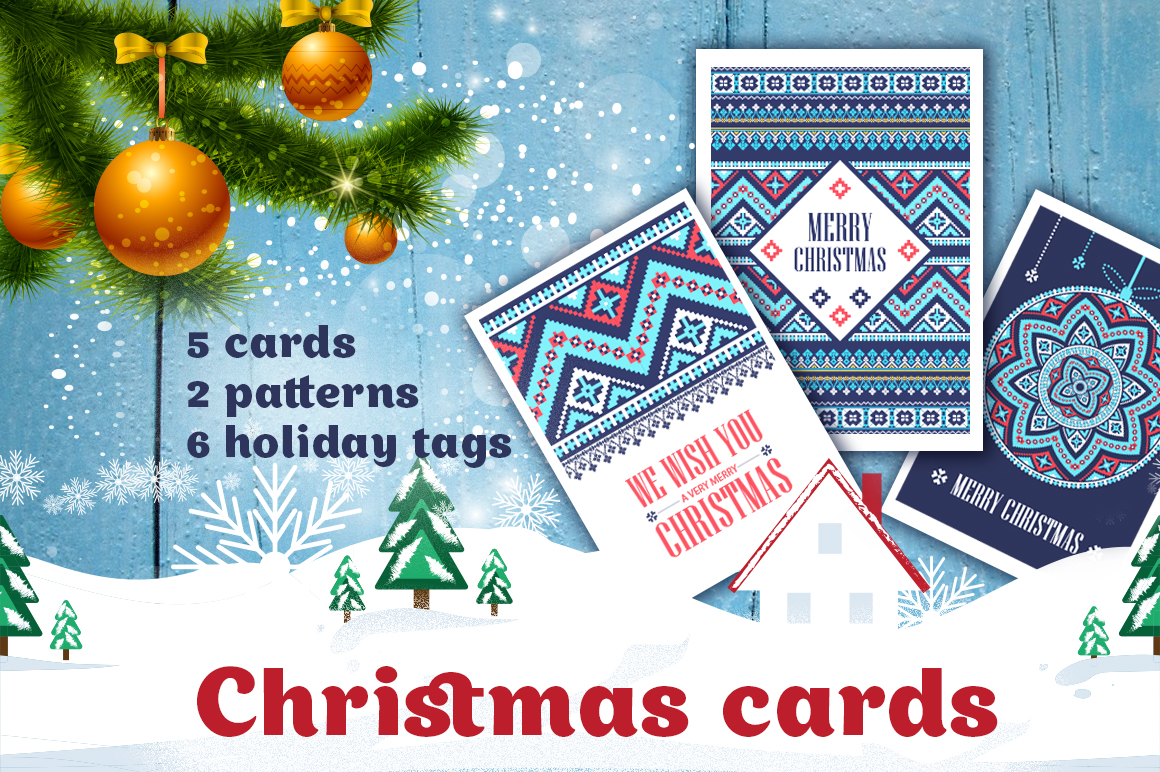
Christmas Cards, Patterns and Tags is not just a collection of festive visuals—it’s a curated toolkit built for intentionality. At its core, it delivers traditional-style Merry Christmas vector cards, New Year-themed pixel-art backgrounds (including holiday balls and seamless geometric patterns), and a set of modern tribal tags inspired by Aztec motifs—all optimized for real-world application. What makes this set strategically useful isn’t its aesthetic appeal alone, but how each component supports clarity, consistency, and control in communication planning.
Why This Matters Beyond Decoration
For entrepreneurs, educators, marketers, and small business owners, holiday messaging is rarely about sentiment alone. It’s a touchpoint with measurable impact: reinforcing brand voice, nurturing client relationships, signaling professionalism, or anchoring seasonal campaigns. Randomly selected clipart or overused templates dilute that impact. Christmas Cards, Patterns and Tags offers structure—pre-designed, production-ready assets where typography is converted to curves (ensuring text integrity across platforms), formats are standardized (EPS, AI, JPG), and sizing is practical (A4 for print, scalable vectors for digital adaptation).
This eliminates guesswork in execution—but only if used with purpose. A beautifully rendered Aztec-patterned gift card means little if it doesn’t align with your audience’s expectations or your broader visual identity. The value lies not in the pixels, but in the decision-making framework they enable.
When to Use These Assets—and When to Pause
Use Christmas Cards, Patterns and Tags when you need to:
- Scale personalized outreach efficiently—e.g., sending branded holiday cards to 200 clients without redesigning from scratch each time;
- Anchor seasonal content visually—a New Year seamless pattern as a background for email headers, social banners, or presentation slides adds cohesion without sacrificing speed;
- Extend brand language into physical or hybrid experiences—a geometric tribal tag applied to gift packaging, event signage, or workshop handouts reinforces recognition through repetition and rhythm;
- Support internal team alignment—providing designers or contractors with pre-approved, on-brand elements reduces revision cycles and maintains fidelity across channels.
Pause before using if:
- You haven’t clarified who the message is for—and what action or feeling you want to prompt;
- Your current brand palette or tone conflicts with the traditional-Merry-Christmas or pixel-art aesthetic (e.g., a minimalist tech startup may find the Aztec patterns tonally dissonant without thoughtful adaptation);
- You’re relying on these assets to compensate for weak strategy—no design element fixes unclear messaging or misaligned timing.
How to Approach Implementation Intentionally
Start with outcomes—not assets. Ask: “What do I want recipients to remember, feel, or do after seeing this?” If the goal is gratitude, prioritize clean card layouts with ample white space and legible typography—use the A4 vector cards with text-in-curves to preserve hierarchy. If the aim is energy and celebration, lean into the colorful tribal tags or pixel ornaments—but pair them with concise, warm copy, not dense paragraphs.
Consider context. A printed card sent to long-standing clients benefits from the tactile weight of a traditional design; a digital newsletter banner gains clarity from the high-contrast New Year seamless patterns. The included EPS and AI files let you adjust color overlays or crop elements precisely—so adapt, don’t just insert. For example, desaturate an Aztec tag slightly and layer it behind semi-transparent text to maintain readability while retaining visual interest.
Also note what’s not included: mock-ups. That’s intentional. It signals that these are foundational elements—not finished solutions. You retain full control over how they integrate into your ecosystem: whether that’s embedding a pattern into a Canva template, importing an EPS file into InDesign for multi-page stationery, or converting a JPG tag into a sticker sheet via a local print shop.
Practical Planning Tips for Real Workflows
Batch production smartly. With five distinct card designs (each in EPS, AI, and JPG), you can assign variations by audience segment—e.g., one design for retail partners, another for educators—without starting from zero each time. Keep the AI files editable for last-minute name personalization or date updates.
Leverage patterns beyond the obvious. That New Year seamless background isn’t only for greetings—it works as a subtle texture in proposal covers, webinar slide footers, or even as a watermark on downloadable resources. Its pixel-art quality adds nostalgic warmth without overwhelming content.
Treat tags as functional labels—not just decoration. The single tribal tag (in EPS, AI, JPG) can serve as a consistent visual anchor across touchpoints: a “Thank You” badge on order confirmations, a “Limited Edition” marker on holiday product listings, or a “2025 Preview” stamp on early-bird campaign assets. Consistency here builds subconscious recognition faster than words alone.
Risks of Using Without Context
The most common pitfall isn’t technical—it’s strategic drift. Downloading Christmas Cards, Patterns and Tags and dropping elements into projects without auditing their fit creates visual noise, not resonance. A vibrant Aztec pattern may energize a music festival’s holiday promo but confuse a law firm’s year-end client update. Similarly, using all five card designs interchangeably across channels erodes brand coherence—your audience shouldn’t wonder if they’re engaging with the same organization.
Another risk is over-reliance on aesthetics to mask operational gaps. Beautiful cards won’t compensate for late delivery, poor data hygiene (e.g., misspelled names), or generic messaging. The assets amplify execution—but they don’t replace planning, empathy, or follow-through.
Long-Term Value Lies in Reusability and Adaptation
Unlike trend-dependent graphics, the traditional style of these Christmas cards and the structured geometry of the tribal patterns give them staying power. You can rotate designs annually, recolor patterns to match evolving brand guidelines, or isolate individual ornaments to build new compositions. Because text is outlined in curves, you avoid font licensing issues when sharing files with printers or collaborators.
For educators building classroom resources, the seamless patterns offer low-effort ways to create themed worksheets or bulletin board backdrops. For freelancers, having vetted, professional-grade holiday assets means faster quoting and more confident deliverables—no scrambling for “festive but not cliché” solutions two days before deadline.
Most importantly, this set supports decision discipline. Choosing which card to use, which pattern to emphasize, or whether a tribal tag adds value—or clutter—requires reflection. That reflection sharpens your broader design judgment and strengthens your ability to evaluate any creative asset against real goals.
Final Thought: Tools Serve Strategy, Not the Other Way Around
Christmas Cards, Patterns and Tags earns its place in your workflow not because it’s comprehensive, but because it’s coherent. Its strength is in constraint: limited formats, intentional styles, and clear boundaries (e.g., no mock-ups, no fonts to install). That constraint invites focus—on audience, on message, on timing. Use it to reduce friction, not to avoid thinking. Let the traditional cards carry sincerity, the pixel ornaments evoke shared nostalgia, and the tribal tags signal thoughtful distinction. But always ask first: What outcome does this serve? Then choose—and create—with precision.