Pumpkin Pack for Halloween Design Projects
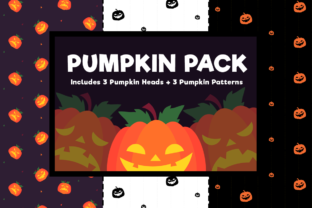
The Pumpkin Pack is a curated digital asset collection designed specifically for Halloween-themed creative work. It includes three distinct pumpkin head illustrations delivered as transparent-background PNG files, one editable vector file in Adobe Illustrator (AI) format, and three seamless pumpkin-based pattern designs. Each element is crafted with consistent style and visual cohesion, supporting both standalone use and integrated layout applications.
Who Might Consider the Pumpkin Pack?
Designers, educators, small business owners, and DIY creators often seek reusable, high-quality Halloween assets to support seasonal projects. The Pumpkin Pack suits individuals who need ready-to-use visuals without investing time in custom illustration or extensive editing. It’s especially relevant for those preparing social media graphics, classroom materials, event signage, printable decorations, or web banners ahead of Halloween.
Because it includes both raster (PNG) and vector (AI) formats, the pack accommodates users working across different software environments — from Canva and PowerPoint users relying on PNGs to professional designers needing scalable, editable vectors. The inclusion of patterns also extends utility beyond single-element placement, enabling background fills, textile mockups, or repeated surface design.
Practical Benefits of the Pumpkin Pack
One primary benefit is time efficiency. Creating original pumpkin illustrations with stylistic consistency — especially across multiple variations and formats — can require significant design time and technical skill. With the Pumpkin Pack, users gain immediate access to polished, production-ready assets.
Format diversity supports flexibility: PNGs allow drag-and-drop use in most platforms; the Illustrator file permits color adjustments, resizing without quality loss, and integration into larger vector compositions; and the patterns offer texture and rhythm without requiring manual tiling setup.
Consistency across elements reduces visual mismatch in multi-component layouts. For example, using a pumpkin head PNG alongside a matching pattern helps maintain thematic unity in a flyer or digital ad — a subtle but meaningful advantage when building recognizable seasonal branding.
Tradeoffs and Considerations
The Pumpkin Pack is intentionally focused. It does not include animated versions, alternate color palettes beyond what’s provided, or additional Halloween motifs like bats, ghosts, or candy. Users seeking broader seasonal variety may need to supplement it with other resources.
Licensing terms matter. While most commercial-use licenses permit application in client work or physical products, they typically restrict redistribution of the raw files or use in template marketplaces where end users could extract and reuse the assets. Reviewing the license before purchase ensures alignment with intended usage — particularly important for designers offering branded merchandise or digital downloads.
File organization and naming conventions also influence usability. A well-structured pack with clearly labeled layers in the AI file and logically named PNGs simplifies workflow. If the Illustrator file uses grouped objects without layer separation, minor editing — such as recoloring individual features — may require extra steps.
When the Pumpkin Pack Is a Strong Fit
This pack works well for projects with defined scope and timeline constraints. For instance, a teacher preparing a Halloween-themed classroom newsletter has limited prep time but needs visually engaging, age-appropriate graphics. Using the included pumpkin heads and patterns allows quick assembly of headers, borders, and icons without compromising quality.
Small businesses launching limited-run Halloween packaging or promotional emails benefit from cohesive, on-brand visuals that reinforce seasonal messaging. The vector file supports precise scaling for labels or stickers, while the PNGs integrate easily into email builders or e-commerce product pages.
Designers building themed presentation decks or pitch templates may find the patterns especially useful for slide backgrounds, helping establish tone without overwhelming content. The consistent motif supports visual storytelling without requiring custom art direction for each slide.
When Alternatives May Be Worth Exploring
If a project demands highly customized aesthetics — such as a unique pumpkin character with specific expressions, cultural references, or brand-aligned typography — starting from scratch or commissioning custom illustration may yield better results than adapting existing assets.
For teams needing large-scale, multi-seasonal libraries, subscription-based design platforms (e.g., Creative Market bundles or Envato Elements) offer broader variety and ongoing updates. While the Pumpkin Pack delivers focused value, its static nature means no future additions or revisions unless repurchased or updated by the creator.
Users with strict accessibility requirements should verify contrast ratios and legibility of text overlays when applying patterns. Since the pack contains decorative elements only, it doesn’t include accessible alternatives like alt-text descriptions or semantic SVG markup — responsibilities that fall to the end user during implementation.
Making an Informed Decision
Evaluating the Pumpkin Pack begins with clarifying project goals. Ask: What formats will I actually use? Do I need scalability (vector), simplicity (PNG), or repetition (patterns)? How many distinct pumpkin visuals are required — three may be sufficient for a single campaign but limiting for a multi-week series.
Compare technical needs against included assets. If your workflow relies heavily on Figma or Sketch, confirm whether the Illustrator file imports cleanly — some vector features may not translate perfectly across platforms. Similarly, test PNG resolution at intended display sizes; while standard web-resolution PNGs suit digital use, large-format print may require higher-DPI variants not included here.
Consider long-term reuse. Assets used once for a social post have different requirements than those embedded in a recurring annual template. The Pumpkin Pack’s focused scope supports short-term, theme-specific execution but isn’t built for indefinite adaptation across unrelated contexts.
Finally, assess cost relative to effort saved. If sourcing, editing, and formatting comparable assets would take several hours — and the Pumpkin Pack costs less than your hourly design rate — it represents practical resource allocation. If you already own similar assets or have internal capacity to generate them, the value proposition shifts accordingly.
Conclusion
The Pumpkin Pack serves a specific niche: designers and creators needing cohesive, production-ready Halloween visuals with minimal setup. Its strength lies in format variety, stylistic consistency, and immediate usability. It is not a universal solution, nor does it replace custom design where uniqueness or deep brand integration is essential. However, for time-constrained, seasonally focused work — especially across education, small business marketing, or personal crafting — it offers a balanced combination of quality, flexibility, and efficiency. Evaluating it against actual project requirements — rather than general appeal — leads to more confident, purposeful selection.