Seamless Butterfly Pattern
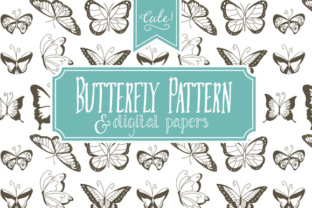
A hand-drawn, vintage-inspired butterfly pattern isn’t just decorative—it’s a quiet response to how design thinking has shifted over the past decade. Today’s creators aren’t just looking for “pretty” assets; they’re seeking tools that balance authenticity with flexibility, nostalgia with utility, and craftsmanship with digital efficiency. The Seamless Butterfly Pattern sits squarely in that intersection: botanical in spirit, scientific in detail, and engineered for real-world creative workflows.
Why Seamless Matters—More Than Just Technical Convenience
“Seamless” used to mean “no visible repeats”—a technical win for background fills. Now, it signals something deeper: intentionality in scale, adaptability across formats, and respect for the designer’s time. With rising demand for multi-platform content—social posts, pitch decks, packaging mockups, print-on-demand products, educational handouts—the ability to fill any shape or size without distortion or manual tiling is no longer a luxury. It’s baseline functionality. The Seamless Butterfly Pattern delivers that reliability out of the box: tile once, then resize, rotate, or recolor without breaking continuity. No clipping masks needed. No guesswork about alignment. Just consistent, organic repetition that feels handmade—not algorithmic.
Vintage Meets Vector: A Shift Toward Thoughtful Authenticity
There’s been a noticeable pivot away from hyper-polished, AI-generated textures toward assets with tactile nuance and historical resonance. Think of the resurgence of letterpress aesthetics, analog film grain, or hand-inked botanical illustrations—not as retro gimmicks, but as visual languages that communicate care, curiosity, and human attention. The Seamless Butterfly Pattern taps into this shift. Its linework recalls 19th-century entomological sketches, with delicate wing venation and subtle asymmetry that avoids sterile uniformity. Yet it’s built for today: fully layered vector files (AI and EPS), clearly labeled paths, and grouped elements that make selective editing intuitive—not intimidating. You’re not stuck with a static image. You’re handed a living sketchbook page you can annotate, simplify, or reinterpret.
Editable Color—Not Just Swatches, But Control
Color flexibility used to mean choosing from preset palettes. Now, it means owning the palette. The Seamless Butterfly Pattern includes editable swatch libraries for Illustrator—sepia tone, black, and two additional variants—so you can drag, drop, and instantly reassign hues across all butterfly instances. Better yet, the vector layers remain fully accessible: swap a stroke color, adjust opacity on antennae, mute background wings while keeping foreground ones bold. This level of control matters when aligning visuals with brand guidelines, accessibility standards (e.g., contrast ratios), or seasonal campaigns. A wellness brand might soften the sepia into warm taupe and sage; an edtech startup could sharpen the black version with electric cyan accents—all without outsourcing or waiting for revisions.
Workflow Integration—No “One True App” Assumptions
Creative professionals rarely use just one tool—and they shouldn’t have to. The Seamless Butterfly Pattern acknowledges that reality. JPEG swatches work in Photoshop for quick layer-based texture overlays. Pre-saved .PAT files drop straight into Photoshop’s pattern library for instant fills. Vector files open cleanly in Illustrator CS1 and above, supporting both legacy studio setups and modern cloud-based collaboration. Even the 12×12 JPEG papers—offered in two repeat densities and two tones—are sized for common print standards and digital canvas presets, reducing friction whether you’re designing a Canva social banner or prepping a fabric print for Spoonflower.
Real-World Use Cases, Not Just Hypotheticals
- Educators use the sepia-tone version to create printable science unit backgrounds—subtle enough not to distract, rich enough to spark inquiry about symmetry, adaptation, or taxonomy.
- Small business owners apply the black vector version to product labels, then recolor it to match seasonal packaging—deep indigo for winter, coral for summer—without repurchasing assets.
- Freelance designers embed the pattern into client style guides as a scalable texture option, ensuring consistency across web, presentation, and print deliverables.
- Bloggers and content creators layer the JPEG swatch over photography in Lightroom or Photoshop to add gentle visual rhythm to feature images—no need to license separate textures or risk copyright ambiguity.
What “Customizable” Actually Means—And What It Doesn’t
The claim “completely customizable” is often vague—or worse, misleading. Here, it’s literal: every wing, body segment, and antennae path is a distinct vector object. You can delete species, isolate flight angles, or adjust stroke weight per element. But customization also includes restraint. The premade 12×12 JPEGs exist for moments when speed trumps experimentation—when you need a polished, print-ready background in under 60 seconds. That duality reflects how modern creative work actually happens: oscillating between deep editing and rapid iteration, depending on deadline, scope, and audience. There’s no pressure to “unlock potential.” You choose your entry point—and the asset meets you there.
Technology That Supports, Not Dictates
No plug-ins. No subscription dependencies. No forced cloud sync. The Seamless Butterfly Pattern works with software you already own and understand—Photoshop and Illustrator—as long as you’re on CS1 or newer. That’s intentional. It respects existing infrastructure, especially for educators, nonprofits, and studios using older-but-stable versions due to budget, compatibility, or training constraints. And because the vectors are clean and uncluttered (no embedded raster effects or non-standard fonts), they convert reliably to PDF, SVG, or even CSS background patterns via export—extending usefulness beyond Adobe ecosystems.
A Pattern With Purpose—Not Just Decoration
In an era where visual fatigue is real and attention spans are fragmented, pattern choice carries quiet messaging power. Butterflies signal transformation, fragility, interdependence—ideas increasingly central to sustainability branding, mental health advocacy, and education reform. Using a hand-drawn, scientifically grounded interpretation—rather than a cartoonish or overly stylized one—adds credibility without sacrificing warmth. It doesn’t shout. It invites closer looking. And because it’s seamless and editable, that invitation extends to how you use it: cropped tightly for a logo lockup, scaled down for watermark subtlety, or blown up for immersive wall graphics.
Getting Started Is Intentional, Not Automatic
This isn’t drag-and-drop wallpaper. You’ll need Photoshop or Illustrator to access the full range of features—and that’s by design. It filters for users who value precision, control, and integration over instant gratification. If you’re building systems—not just one-off visuals—that investment pays off. You’re not buying a background. You’re acquiring a modular, expressive element that grows with your projects, your skills, and your evolving aesthetic.
The Seamless Butterfly Pattern doesn’t chase trends. It anticipates needs: for authenticity that holds up at any scale, for flexibility that doesn’t sacrifice craft, and for tools that empower rather than overwhelm. Whether you’re illustrating a children’s book, designing conference materials, or refreshing a brand’s visual language, it offers a rare combination—timeless reference, modern utility, and room to breathe.